
Raksha Bandhan Gift Ideas for Kids – Screen-Free Robots, Coding and AI
August 13, 2026
Why were Composite Skill Labs Conceptualized?
September 5, 2026
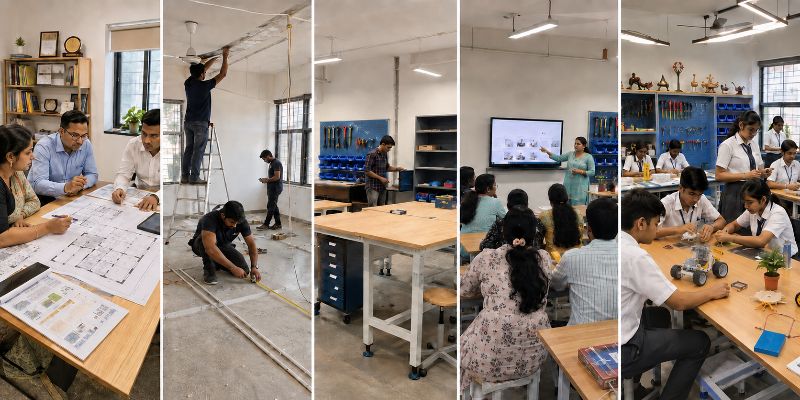
Setting up a Composite Skill Lab can initially seem like a large project for a school.
There is space to identify, tools to procure, furniture to plan, teachers to prepare, safety requirements to address, and curriculum to integrate into the academic timetable.
The process becomes much easier when it is approached in phases.
CBSE itself presents the establishment of Composite Skill Labs as a step-by-step process covering identification, infrastructure readiness, lab design, tools and furniture, and safety.
The important point is that a successful Composite Skill Lab implementation roadmap should not begin with a shopping list.
It should begin with one question:
What kind of practical learning should this lab enable for our students?
Once this is clear, decisions about space, equipment, staffing, curriculum, and implementation become easier to align on.
Why Should Schools Start Planning Their Composite Skill Lab Now?
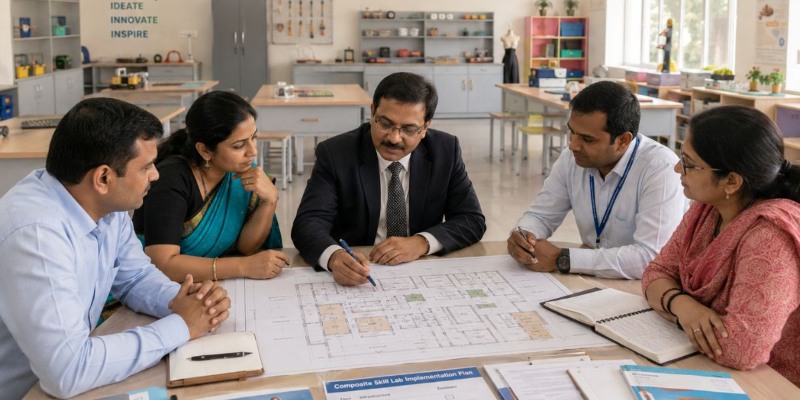
CBSE’s March 2026 circular reiterates that schools seeking fresh affiliation must have a Composite Skill Lab with the necessary equipment and machinery. Existing affiliated schools are required to establish their CSL by 22 August 2027.
The guidelines also emphasise accessibility, safety and adaptability so that the lab can support meaningful hands-on and activity-based learning.
How Schools Can Set Up a Composite Skill Lab in 8 Practical Phases
Setting up a Composite Skill Lab becomes much easier when schools treat it as a phased implementation process rather than a one-time infrastructure project. From auditing existing resources and selecting skill sectors to preparing teachers and integrating the lab into the timetable, each phase helps schools move towards a safer, more practical, and sustainable CSL setup.
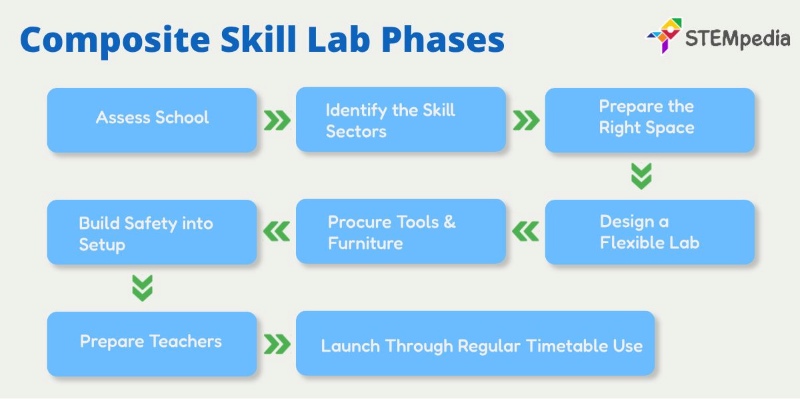
Phase 1: Assess School Readiness
Start with an audit before buying anything.
Review:
- Existing labs and spaces
- Tools and equipment
- Computers and furniture
- Storage and utilities
- Safety resources
- Teacher readiness
- Existing AI and robotics resources
CBSE allows schools to leverage facilities such as IT Labs, ATLs, makerspaces, and gardens for relevant skill activities, but these spaces do not automatically replace the complete CSL requirement.
Schools can therefore begin by determining what can be reused, what can support selected activities, and what still needs to be added.
Goal: Identify existing strengths and avoid unnecessary duplicate procurement.
Phase 2: Identify the Skill Sectors
Select skill subjects across the three Forms of Work:
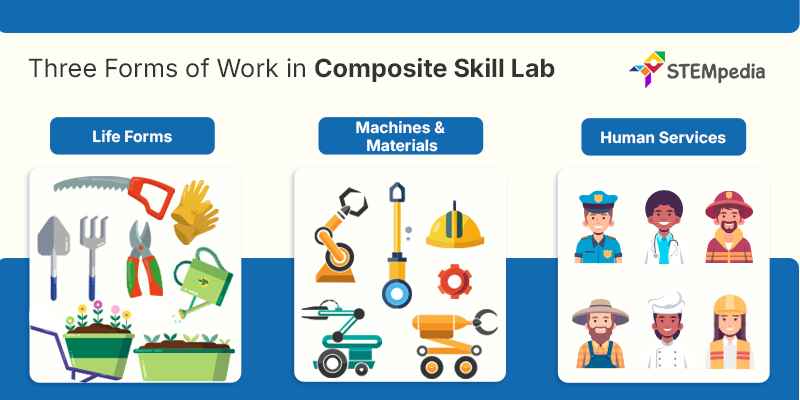
CBSE recommends at least three skill subjects covering all three forms of work, chosen according to local context, student interests, available resources, and teacher capacity.
Goal: Start with a practical mix of sectors that the school can implement regularly.
Phase 3: Prepare the Right Space
Select a room that supports safe, hands-on learning.
CBSE provides for:
- One 600 sq. ft. lab for Classes VI–XII, or
- Two 400 sq. ft. labs, one for VI–X and one for XI–XII.
Check:
- Ventilation
- Lighting
- Electrical points
- Water and drainage where needed
- Storage
- Accessibility
- Safe movement space
Goal: Create a functional space for approximately 25–40 students to work safely.
Phase 4: Design a Flexible Lab
Use a modular layout that can adapt to different projects and skill sectors. CBSE specifically recommends flexible workstations and reconfigurable spaces.
Include:
- Collaborative worktables
- Storage
- Teacher and presentation areas
- Computer or AI workstation
- Tool pegboards
- Safety corner
- Wet-work area where required
CBSE’s sample layouts demonstrate flexible worktables, storage, toolkits, presentation facilities and safety areas rather than a rigid classroom configuration.
Where technology-focused projects are planned, schools can create a shared coding, electronics, AI and robotics zone within the wider multi-sector lab.
For an example of how practical skills and emerging technologies can coexist within a CSL environment, explore: KFTL Composite Skill Lab by STEMpedia – Practical AI, Robotics & STEM Skills
Goal: Create a lab that can evolve instead of becoming locked into one activity or technology.
Phase 5: Procure Tools and Furniture Strategically
Purchase only after the sectors, room and layout are finalised.
Prioritise:
- Common infrastructure: worktables, stools, storage, electrical fittings and safety equipment.
- Sector tools: gardening, electronics, robotics, apparel, healthcare or retail equipment.
- Advanced technology: AI, IoT, coding, computer vision and digital fabrication where relevant.
CBSE states that its equipment lists are suggestive and should be adapted to school readiness and requirements.
For detailed procurement planning, read: Composite Skill Lab Tools and Equipment for CBSE Schools
Goal: Buy what supports actual curriculum and projects, not simply more equipment.
Phase 6: Build Safety into the Setup
Safety must be planned before student use.
Ensure:
- Fire extinguishers and first aid
- Safe electrical fittings
- Secure tool storage
- Protective equipment
- Equipment labels
- Safety instructions
- Emergency procedures and drills
CBSE calls for clear safety protocols, supervision, regular inspections, and a dedicated safety corner.
Goal: Make safe practice part of everyday lab operation.
Phase 7: Prepare Teachers
A finished lab still needs teachers who can use it confidently.
CBSE identifies teacher training and staffing as one of the core components required for effective skill education.
Teachers should be prepared to:
- Conduct practical activities
- Use tools safely
- Manage student teams
- Troubleshoot basic issues
- Assess projects
- Maintain resources
- Guide interdisciplinary learning
Teacher development should focus on both technical confidence and project-based pedagogy.
STEMpedia’s Teacher Training Programme can support hands-on upskilling in coding, AI, robotics and practical technology integration.
CBSE identifies teacher training and staffing as a core part of effective skill education.
Goal: Ensure teachers are ready before regular student sessions begin.
Phase 8: Launch Through Regular Timetable Use
The real launch begins when students use the lab regularly—not at the inauguration.
Finalise:
- Classes and groups
- Weekly schedule
- Initial projects
- Teacher responsibilities
- Tool and consumable management
- Safety briefing
- Assessment and maintenance processes
CBSE specifies 110 annual hours of Skill Education for Classes VI–X.
Goal: Turn the CSL from infrastructure into an active, year-round learning programme.
What Happens After the Composite Skill Lab Is Set Up?
The implementation journey does not end when the furniture and tools are installed.
The next phase is to make the lab active throughout the academic year.
1. Run Grade-Wise Projects
Students should progressively move from guided activities towards more independent projects.
At the Middle Stage, CBSE’s guideline reflects the NCF-SE approach of three projects per grade—one from each form of work—leading to nine projects across the stage.
Projects should be:
- Age-appropriate
- Hands-on
- Connected to real situations
- Interdisciplinary where useful
- Designed around problem-solving
2. Assess Practical Learning
Skill education should assess both the process and the final result.
Useful methods include:
- Observation
- Project portfolios
- Practical demonstrations
- Reflection notes
- Presentations
- Project rubrics
The NCF-SE approach reflected in CBSE guidance gives importance to observation, portfolios and projects for vocational assessment.
3. Showcase Student Work
Students should have opportunities to present what they build.
CBSE’s Middle Stage guidance includes an annual Kaushal Mela or Skills Fair where students can showcase projects, learning and reflections.
Schools may also organise:
- Project exhibitions
- Innovation challenges
- Inter-house competitions
- Demonstration days
- Community projects
- Skill showcases
4. Build Industry and Community Connections
Composite Skill Lab learning should connect students with the world of work.
CBSE includes industry partnerships, field visits, expert sessions and workplace exposure as important components of skill education.
Schools can collaborate with:
- Local businesses
- Farms
- Workshops
- Healthcare organisations
- Retail businesses
- Technology companies
- Entrepreneurs
- NGOs
- Artisans
5. Review and Expand the Lab
After each implementation cycle, review:
- Lab utilisation
- Student participation
- Teacher confidence
- Equipment utilisation
- Consumable requirements
- Maintenance
- Safety observations
- Project quality
- Timetable implementation
The school can then add new sectors, technologies and tools according to actual learning needs.
How STEMpedia Can Support Your Composite Skill Lab Journey
Setting up a Composite Skill Lab requires more than infrastructure. Schools need curriculum, trained teachers, suitable technology, practical projects, and continuous support to make the lab effective.
STEMpedia supports schools through:
- Infrastructure planning – Lab readiness assessment and implementation guidance
- Curriculum & resources – Grade-wise learning content and practical activities
- Teacher Training – Hands-on preparation for coding, AI, robotics and project-based learning
- Technology Integration – Future-ready tools for skill-based learning
STEMpedia’s Technology Ecosystem
Schools can integrate age-appropriate platforms connected with curriculum and regular projects:
- PictoBlox – Block Coding, Python, AI, Machine Learning, IoT and physical computing
- Quarky – Robotics, sensors, movement and hands-on AI projects
- Quarky Intellio – Computer vision, audio interaction, AR and intelligent robotics
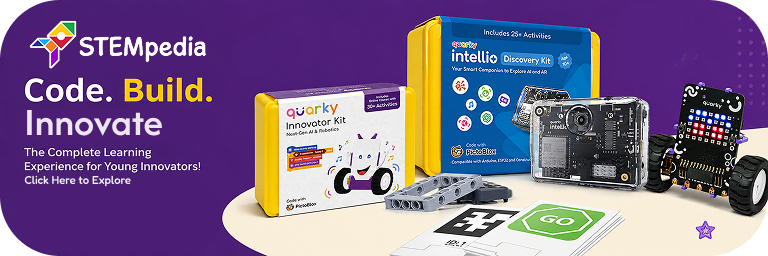
These platforms support the technology journey within a Composite Skill Lab and complement the broader CBSE sector-wise requirements.
Complete CSL Journey:
Readiness → Infrastructure → Technology → Curriculum → Teacher Training → Student Projects
For detailed AI planning, read:
AI in Composite Skill Lab – What CBSE Means by AI Infrastructure
Planning Your Composite Skill Lab?
Explore STEMpedia’s Composite Skill Lab solutions to build a practical, scalable, and future-ready skill learning environment.
Conclusion
A successful Composite Skill Lab implementation roadmap is not simply about purchasing equipment.
It is about making a series of connected decisions:
Select the right skills → Prepare the space → Design for practical learning → Procure purposefully → Establish safety → Prepare teachers → Integrate the timetable → Run projects → Review and improve.
CBSE provides a structured framework, but every school should adapt its implementation according to student needs, local context, existing resources, teacher readiness, and long-term goals.
When implemented thoughtfully, a Composite Skill Lab becomes more than infrastructure. It becomes a working learning environment where students think, make, test, collaborate, and solve real-world problems.
Frequently Asked Questions
1. How do you set up a Composite Skill Lab?
Begin by assessing existing resources and selecting relevant skill sectors. Then identify the space, prepare infrastructure, create a flexible layout, procure suitable tools, implement safety measures, prepare teachers, and integrate regular lab sessions into the timetable.
2. How much space does a Composite Skill Lab require?
CBSE provides for either one minimum 600 sq. ft. lab for Classes VI–XII or two minimum 400 sq. ft. labs, one for VI–X and another for XI–XII.
3. How much does a Composite Skill Lab cost?
CBSE provides a suggestive estimate of approximately ₹3–6 lakh, depending on sectors, lab size, furniture and equipment quantities. Actual costs will vary by school.
4. Can an ATL or IT Lab become a Composite Skill Lab?
These spaces can support selected CSL activities, but they do not automatically become a complete Composite Skill Lab. CBSE provides specific guidance on how existing facilities may be leveraged.
5. What happens after the CSL is installed?
Schools should move into regular curriculum delivery, practical projects, teacher support, assessment, industry exposure, student portfolios, exhibitions, and Kaushal Melas.